Inspection Management Software: How to Digitize Inspections From Conducting to Report Generation
If you manage inspections across more than one site, you already know the real problem isn't doing the inspection — it's everything that happens after. The checklist gets filled out on paper or in a generic form app, someone has to manually turn it into a report, and by the time it reaches the person who needs to act on it, the issue it flagged may already be a bigger problem.
That gap — between conducting an inspection and having a usable, shareable report — is exactly what inspection management software is built to close.
What Is Inspection Management Software?
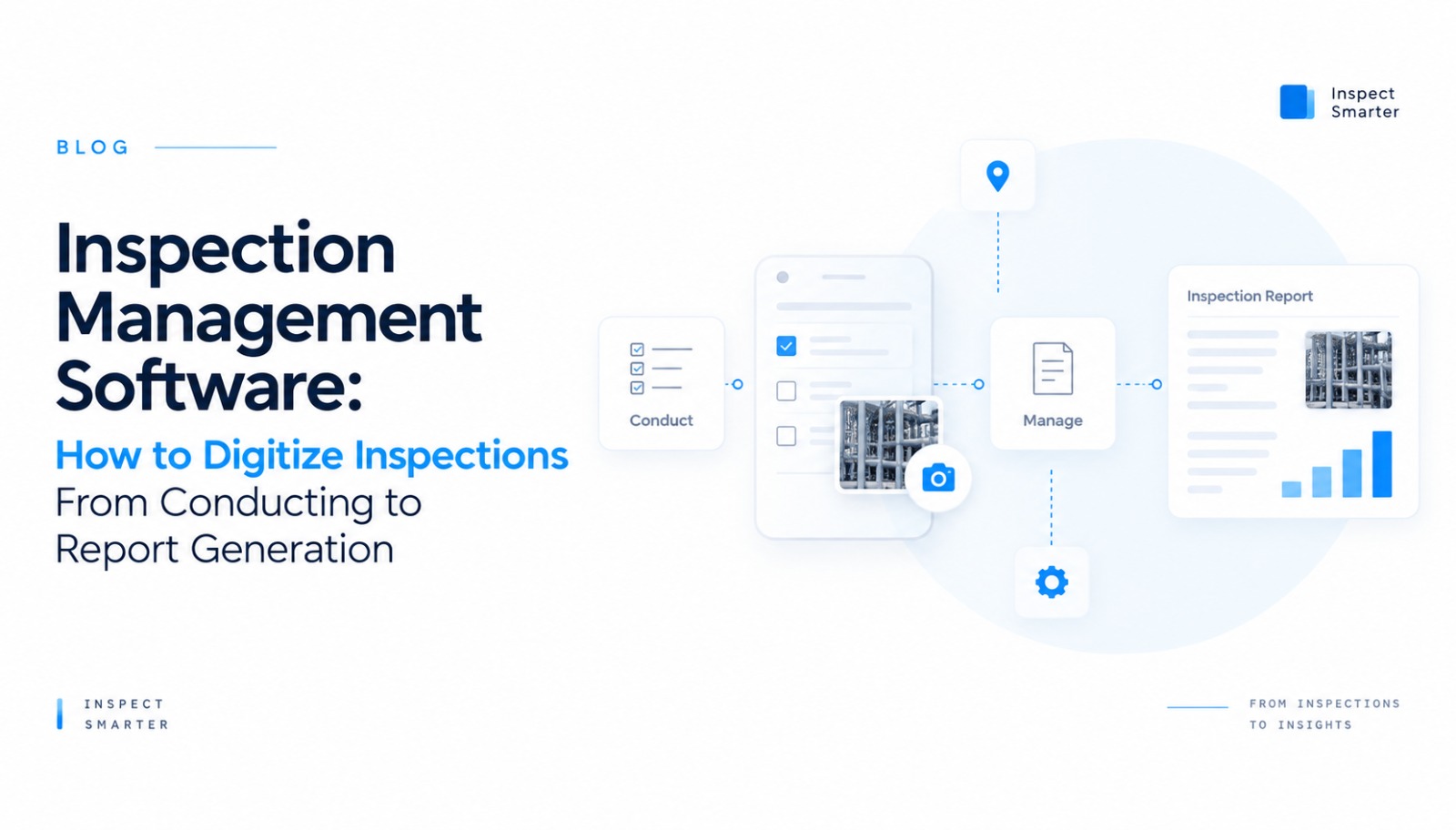
Inspection management software is a digital system that replaces manual, paper-based, or spreadsheet-driven inspection workflows with a structured process: schedule the inspection, conduct it on a mobile device, capture findings with photos and notes, and automatically generate a report — without anyone re-typing data or chasing down forms.
For enterprises running inspections across multiple plants, sites, or facilities, this isn't a nice-to-have. It's the difference between knowing what's happening on the ground in real time and finding out weeks later, during an audit or a failure, that something was missed.
Why Manual Inspection Processes Break Down
Most organizations don't lack a process — they have checklists, SOPs, and inspection schedules. What they lack is a system that connects each step. Here's where it typically breaks:
- Conducting the inspection: Paper forms or disconnected apps mean data lives in silos until someone manually consolidates it.
- Turning findings into a report: Someone — often a supervisor or admin — spends hours converting raw notes into a formatted report, introducing delays and transcription errors.
- Getting the report to the right person: Reports sit in email inboxes or shared drives instead of triggering the next action (a repair ticket, a compliance flag, an asset update).
- Tracking it across sites: Without a central system, there's no consistent way to compare inspection performance or catch patterns across locations.
Each of these gaps adds friction — and friction is where compliance risk and downtime hide.
How Digitizing the Inspection Lifecycle Actually Works
A properly digitized inspection process covers the full lifecycle, not just the checklist step:
1. Scheduling and Assignment
Inspections are scheduled centrally and automatically assigned to the right field team member, at the right site, on the right recurring cadence — no manual coordination required.
2. Conducting the Inspection
Field teams complete inspections on a mobile app, even offline at remote sites. Photos, GPS-tagged locations, and structured checklist responses are captured directly at the point of inspection, not re-entered later.
3. Automatic Report Generation
This is the step most organizations still do manually — and it's where the most time gets lost. With inspection management software, the report is generated automatically the moment the inspection is submitted, formatted and ready to share, with no manual assembly required.
4. Centralized Visibility Across Sites
Every inspection, across every site, lands in one system. That means ops and compliance leaders can see patterns — which sites are falling behind, which assets keep failing inspection, where recurring issues are clustering — instead of reconciling reports from a dozen different locations.
5. Connecting Findings to Action
An inspection finding shouldn't be a dead end. When inspection data is connected to asset records and compliance documentation, a flagged issue can automatically trigger a maintenance ticket or a compliance follow-up, instead of getting lost in an inbox.
What to Look for in Inspection Management Software
If you're evaluating a system, these are the capabilities that actually matter for multi-site enterprises:
- Mobile-first, offline-capable data capture — field sites don't always have reliable connectivity
- Automatic report generation — not just digital forms that still require manual formatting
- Multi-site rollup reporting — visibility across locations, not just within one
- Integration with asset and compliance records — so findings connect to the bigger picture, not just a standalone PDF
- Configurable checklists — every industry and site type inspects differently
The Bottom Line
The inspection itself was never really the bottleneck — the process around it was. Digitizing the full lifecycle, from conducting the inspection to generating the report and connecting findings to action, is what turns inspections from a compliance chore into a real operational signal.
Spectent Inspect was built around exactly this gap — digitizing the entire inspection lifecycle from conduction to report generation, so nothing gets lost between the checklist and the action it should trigger. See how it works →