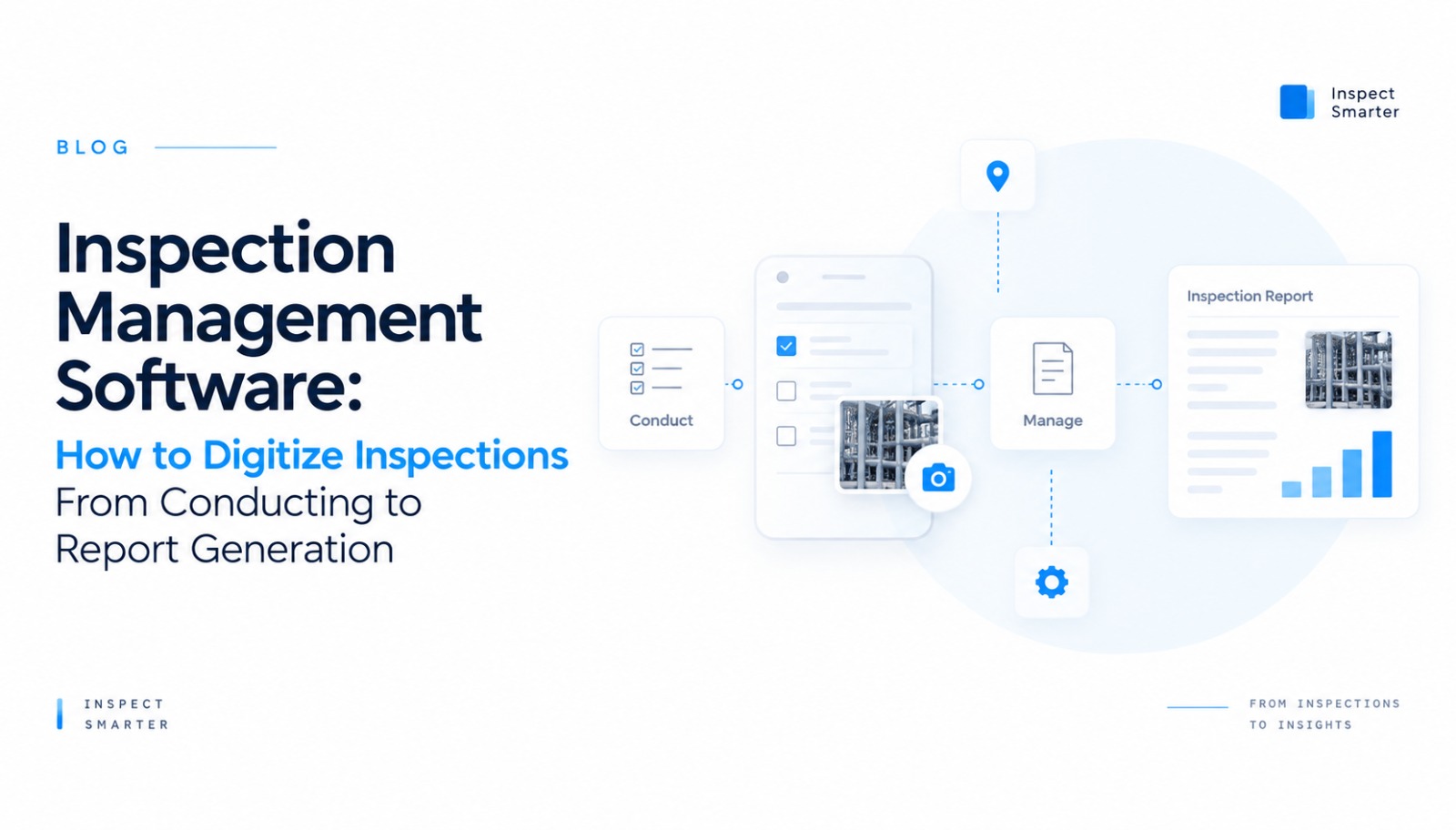
In complex industrial environments, operational failure is rarely the result of inspections not occurring. It is the result of inspections being unverifiable.
When reliance is placed on paper-based checklists and siloed spreadsheets, the "ground reality" becomes obscured. Issues are reported but not tracked to resolution; data is captured but not standardized. When a formal audit or safety review occurs, the lack of an immutable data trail transforms a routine check into a high-stakes liability.
Spectent Inspect was engineered to eliminate this ambiguity. By digitizing the inspection and maintenance lifecycle, we provide organizations with a standardized, visible, and audit-ready framework for on-ground operations.
To assess your current operational risk, consider these five critical questions:
1. How is Execution Verified Across Distributed Sites?
Planning an inspection schedule is simple; ensuring 100% execution across multiple locations is not. Without real-time oversight, "completed" inspections are often just assumptions.
- The Spectent Standard: Our centralized dashboard provides immediate visibility into scheduled versus completed tasks. By tracking progress in real-time and automating alerts for overdue inspections, Spectent ensures that "on-ground" activity matches "on-paper" expectations.
2. Is There a Standardized Protocol for Every Asset?
Inconsistency is a primary driver of audit findings. When different teams apply varying standards to the same asset category, the resulting data is statistically unreliable and legally defensensible.
- The Spectent Standard: Spectent Inspect allows leadership to institutionalize structured workflows. Define specific checkpoints by asset category, location, and team. Whether managing ten critical assets or ten thousand, every inspection follows a uniform, pre-defined protocol.
3. Does Your System Mandate Issue Resolution?
A reported issue that remains unresolved is a documented liability. Most manual systems fail at the "hand-off" between detection and rectification.
- The Spectent Standard: We close the loop on accountability. When an anomaly is detected during an inspection, Spectent logs the observation instantly and tracks the status through to verified resolution. This ensures that inspections drive operational improvement, not just documentation.
4. Can You Provide an Immutable Audit Trail?
Auditors do not seek explanations; they seek evidence. Fragmented logs and missing timestamps are frequently flagged as non-compliance, regardless of the actual work performed.
- The Spectent Standard: Every action within Spectent Inspect is timestamped and recorded within a permanent digital history. When an audit occurs, you are not reconstructing records; you are exporting evidence. This turns a multi-day data retrieval process into a seconds-long report generation.
5. Are Inspections Driving Strategic Insights?
If inspection data is not being used to identify trends or performance gaps, it is a wasted resource. Managers require more than "completion logs",they require operational intelligence.
- The Spectent Standard: Spectent transforms raw data into executive-level insights. Analyze task completion rates, recurring issue trends, and team-wise performance metrics. This allows management to move from reactive troubleshooting to proactive operational optimization.
Conclusion: From Checklist to Compliance
Effective inspection management is the foundation of safety, reliability, and cost-control. However, that foundation is only as strong as the data supporting it. For an operation to be truly resilient, its inspection processes must be Standardized, Traceable, and Actionable.
Spectent Inspect integrates these requirements into a single, cohesive platform, providing the visibility required to lead with confidence. When the question of compliance arises, "we believe we are ready" is no longer an acceptable answer.
With Spectent, the answer is: "Here is the data."
Modernize Your Operational Oversight
Eliminate the risks of manual documentation. Transition to a verifiable, digital-first inspection framework with Spectent Inspect.