There is a hidden number sitting in your operation right now that no one has calculated. It is the cost of an appliance that failed a statutory inspection check three months ago. The fault was logged correctly in your system. A compliance report was generated and filed on time. Yet, that same machine is running with the same fault today because the maintenance team never received a task. They received an email. The email was read. The reply said "noted." Nothing was scheduled. Nothing was fixed.
Your inspection software worked exactly as designed. Your operation failed anyway. This is not a paper problem. Organizations that moved off paper checklists years ago are living this failure daily. It is a platform problem,and it is the problem that the inspection software market has spent a decade avoiding.
The Hard Question for 2026
Operations heads and COOs in manufacturing, healthcare, and infrastructure are all asking the same surface-level question: "Are we compliant?" The harder question, which determines if that compliance is actually reliable, is this: Does the system you use to run inspections connect what the technician finds on the ground to what the maintenance team does about it, without a single manual handoff?
Why Digital Was Never the Destination
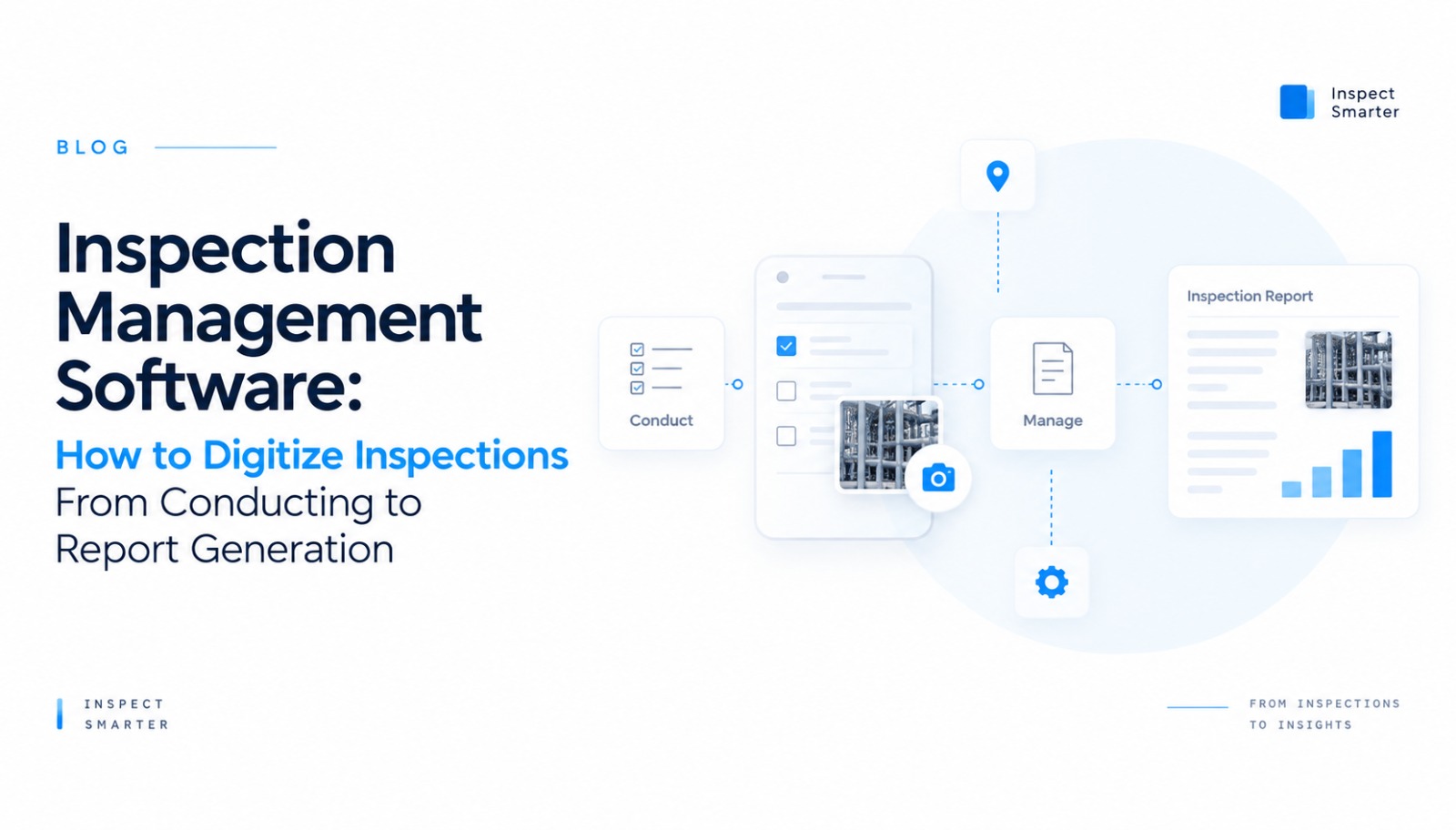
The market defined the goal incorrectly from the beginning. Going digital was positioned as the outcome. It was actually the starting condition. The inspection software market responded to the failures of paper by digitizing the form,the checklist became an app, the signature became a timestamp, and the filing cabinet became a cloud folder. However, for most platforms, the architecture stops there. The fault still travels through a manual process to reach the maintenance team. The industry built digital versions of the same broken workflow and called it a solution.
5 Capabilities That Separate an Execution Platform from a Form Tool
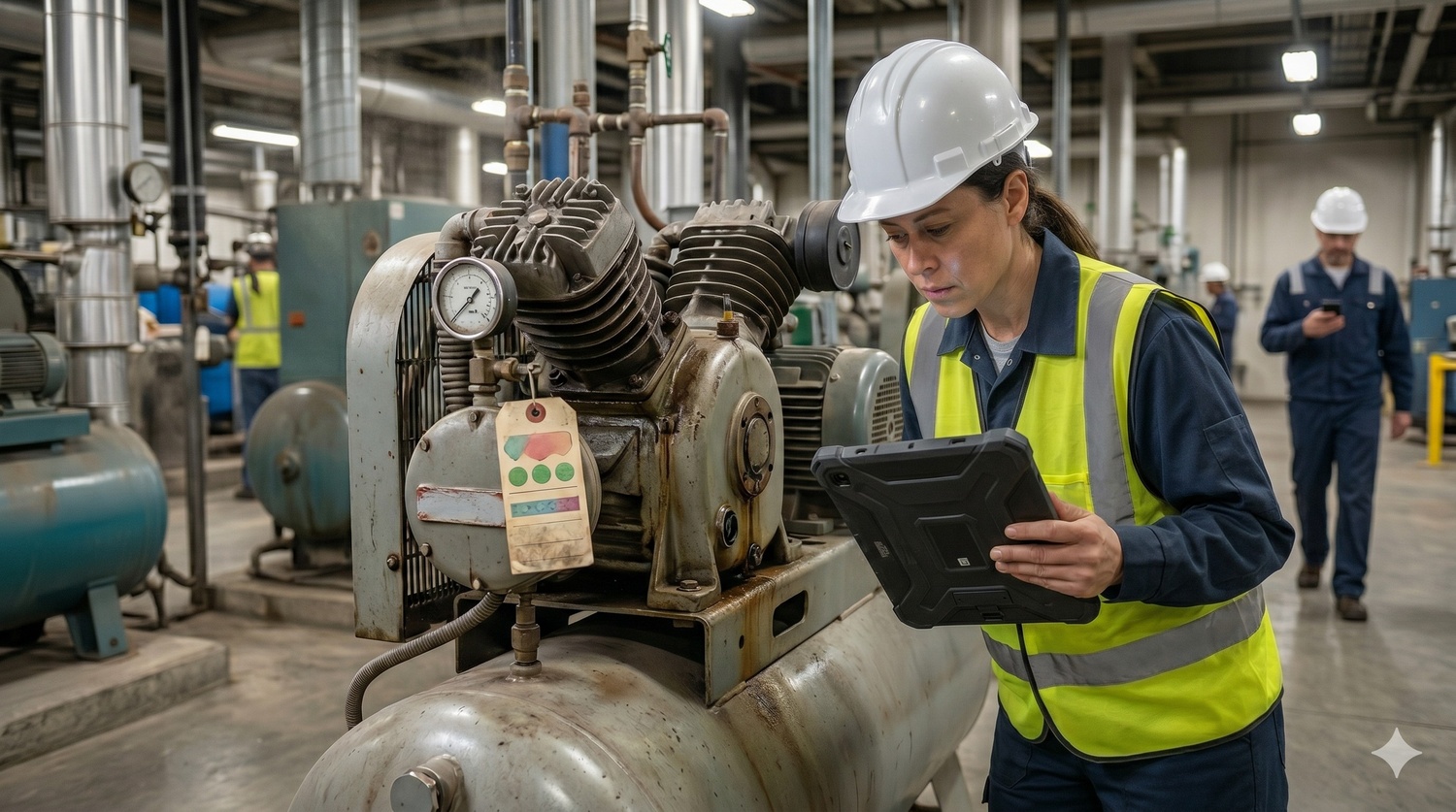
- Appliance History that Travels with the Asset: Every appliance has a history. When a technician stands in front of a compressor, they need to know every fault ever raised and every maintenance intervention completed on that specific unit before they begin the inspection. If that history lives in a report back at the office, the technician is working blind.
- Fault Detection that Creates Action, Not Documentation: The single most important architectural question is what happens the moment a fault is identified. In a genuine inspection workflow, an issue is raised directly against the appliance and a maintenance task is created, assigned, and tracked inside the same system with no manual steps in between.
- Joint Inspection with Individual Accountability: In high-compliance environments, inspections are frequently conducted by more than one person. True compliance evidence requires a live workflow where multiple users complete a single inspection simultaneously, with individual attribution for each section of the record.
- Appliance Movement that Preserves Continuity: Assets move between sites and operational contexts. When an appliance moves, its "sins" must move with it. If the relocation is not recorded as part of the asset's permanent history, operational continuity is lost, and the new site team begins building a history from scratch, unaware of recurring faults.
- Reality-Based Preventive Maintenance: Preventive maintenance should be grounded in operational reality rather than theoretical schedules. When inspection findings feed directly into planning, an appliance recording multiple anomalies can be serviced immediately rather than waiting for a distant scheduled date.
The Demo Test: 6 Questions for Your Next Vendor
- When a technician begins an inspection, what appliance history is visible on their device, and does it travel with the asset through location changes?
- What happens inside your system the moment a fault is identified? Is a maintenance task created automatically?
- Can two users complete a single inspection simultaneously with individual section attribution?
- When an appliance moves from one site to another, what happens to its full inspection and maintenance history?
- Is the checklist calibrated to the appliance type before the technician begins?
- Where does photo evidence live after an inspection,on a report, or on the appliance record permanently?
Conclusion
Your inspection happens on the ground. The platform that manages it should have been built there from the start. A system that captures the inspection but cannot demonstrate the resolution is not audit-ready; it is audit-vulnerable.