Introduction
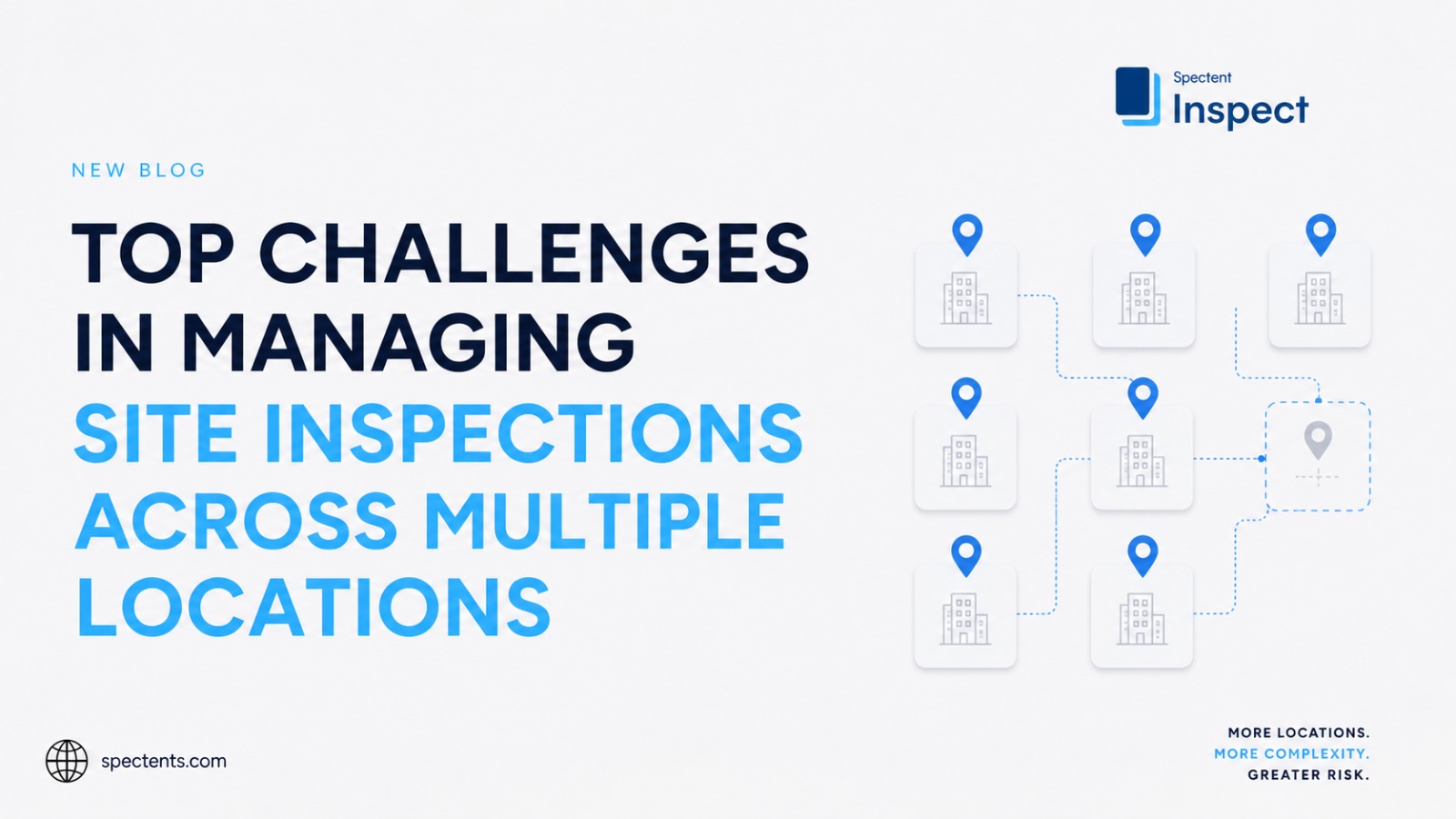
As organizations expand across multiple locations, maintaining consistent inspection processes becomes increasingly difficult.
A manufacturing company may operate several production facilities. A hospitality group may manage hotels across different cities. A construction company may oversee multiple active project sites simultaneously.
While growth creates new opportunities, it also introduces operational complexity.
One of the most common challenges organizations face is managing inspections consistently across all locations.
Without the right inspection management software, inspection processes often become fragmented, difficult to verify, and challenging to monitor.
As a result, organizations struggle with compliance, operational visibility, accountability, and audit readiness.
This is why businesses are increasingly investing in digital inspection software to standardize and streamline inspection operations.
According to the Occupational Safety and Health Administration (OSHA), regular inspections and timely hazard identification are among the most effective ways to prevent workplace incidents and maintain compliance across facilities. Organizations with standardized inspection practices are better positioned to reduce operational risks and improve safety performance.
Why Multi-Site Inspections Become Difficult to Manage
Managing inspections at a single location is relatively straightforward.
However, as organizations expand across multiple facilities, project sites, or branches, maintaining consistency becomes significantly more challenging.
Different teams, varying operational practices, and manual processes often create gaps in inspection quality and visibility.
Without centralized inspection management software, organizations lose control over inspection activities occurring across locations.
Challenge 1: Inconsistent Inspection Processes
One of the biggest challenges in multi-site operations is inconsistency.
Different locations often follow different inspection methods.
For example:
- Different inspection formats
- Different reporting methods
- Different completion standards
- Different documentation practices
As a result, management cannot confidently verify whether inspections are being performed consistently.
A structured inspection workflow helps ensure every inspection follows the same process regardless of location.
Challenge 2: Reliance on Paper-Based Inspections
Many organizations still rely on paper forms and spreadsheets.
While these methods may work initially, they create significant operational challenges as organizations scale.
Paper-based inspections often lead to:
- Missing records
- Delayed reporting
- Data entry errors
- Lost documentation
- Limited visibility
Modern digital inspection software eliminates these inefficiencies by capturing inspection data directly from the field.
Research published by Deloitte highlights that digital transformation in operations significantly improves data accuracy, operational visibility, and decision-making by replacing manual, paper-driven processes with connected digital workflows.
Challenge 3: Lack of Real-Time Visibility
Management teams frequently struggle to answer simple questions such as:
- Which inspections were completed today?
- Which sites have pending inspections?
- What issues were reported?
- Which corrective actions remain open?
Without centralized inspection tracking software, obtaining this information often requires multiple calls, emails, and manual reports.
Organizations need real-time visibility into inspection activities across all locations.
Challenge 4: Delayed Issue Reporting
During inspections, teams frequently identify:
- Equipment defects
- Safety concerns
- Process deviations
- Facility maintenance issues
However, when reporting remains manual, issues are often communicated late.
Delayed reporting can lead to:
- Equipment failures
- Safety incidents
- Compliance violations
- Increased maintenance costs
A modern inspection checklist app enables field teams to report issues instantly during inspections.
Challenge 5: Difficulty Maintaining Accountability
In many organizations, inspection responsibilities are shared across multiple teams.
Without clear accountability, management often struggles to determine:
- Who performed the inspection?
- When was it completed?
- Were all checkpoints verified?
- Was supporting evidence collected?
Modern inspection management software creates accountability through timestamps, user records, and inspection history.
Challenge 6: Audit Preparation Becomes Time-Consuming
Audits require organizations to demonstrate:
- Inspection completion
- Process compliance
- Corrective actions
- Historical records
- Supporting evidence
When inspections are managed through spreadsheets and paper forms, retrieving this information becomes difficult.
Organizations using digital inspection software maintain centralized inspection records that improve audit readiness.
According to the International Organization for Standardization (ISO), maintaining documented information and accurate inspection records is a key requirement for effective management systems and successful compliance audits under standards such as ISO 9001 and ISO 45001.
Challenge 7: Difficulty Managing Multi-Site Inspections
As organizations expand, inspection schedules become increasingly difficult to coordinate.
A company may need to manage:
- Daily inspections
- Weekly inspections
- Monthly inspections
- Equipment inspections
- Safety inspections
- Facility inspections
Without centralized multi-site inspection management, teams often miss critical inspection activities.
Automated scheduling helps ensure inspections are performed consistently across all locations.
The Business Impact of Poor Inspection Management
Ineffective inspection processes can result in:
Increased Operational Risk
Unidentified issues can escalate into larger operational problems.
Reduced Compliance
Inconsistent inspections increase compliance-related risks.
Higher Maintenance Costs
Delayed issue detection often leads to expensive repairs.
Limited Visibility
Management lacks accurate information about operational conditions.
Audit Challenges
Missing inspection records create difficulties during audits and regulatory reviews.
Why Inspection Management Software Matters
Modern inspection management software helps organizations standardize inspections and improve operational visibility.
Instead of relying on paper forms and manual reporting, organizations gain access to:
- Structured inspection workflows
- Automated scheduling
- Real-time visibility
- Issue management
- Inspection history
- Digital records
- Audit-ready documentation
This allows organizations to manage inspections consistently across all locations.
How Digital Inspection Software Solves Multi-Site Inspection Challenges
Standardized Inspection Workflows
A centralized inspection workflow ensures every site follows the same inspection process.
Real-Time Visibility
Management gains visibility into inspection completion, reported issues, and operational performance.
Automated Scheduling
Recurring inspections can be scheduled automatically.
Instant Issue Reporting
Teams can capture issues, comments, and evidence directly within the platform.
Centralized Inspection Records
All inspection data remains accessible from a single system.
Improved Audit Readiness
Organizations maintain verifiable inspection records with supporting evidence.
How Spectent Inspect Helps
Spectent Inspect is a modern inspection management software platform designed to digitize and standardize inspection operations.
The platform helps organizations:
- Create structured inspection workflows
- Perform digital inspections
- Manage multi-site inspections
- Improve inspection visibility
- Track corrective actions
- Capture inspection evidence
- Generate audit-ready records
- Monitor operational performance in real time
With Spectent Inspect, organizations can move away from fragmented inspection processes and gain complete visibility across inspection operations.
Conclusion
Managing inspections across multiple locations becomes increasingly difficult as organizations grow.
Without proper systems, inspection processes often become inconsistent, difficult to verify, and challenging to monitor.
This leads to operational inefficiencies, compliance risks, delayed issue resolution, and reduced accountability.
By implementing inspection management software, organizations can standardize inspections, improve visibility, strengthen compliance, and maintain audit readiness across all locations.
For businesses operating across multiple facilities, sites, or branches, digital inspection management is no longer a convenience.
It is an operational necessity.