Running inspections at one location is manageable. Running them consistently across five, ten, or twenty locations — without a centralized system — is where most organizations start losing control.
If your team is coordinating inspections through WhatsApp messages, emailed spreadsheets, and site-specific checklists that each look a little different, you're not just creating inefficiency. You're creating compliance risk.
Centralized inspection management software solves this — by giving every location a single, standardized process and every manager a single, real-time view of what's happening across all of them.
The Hidden Cost of Decentralized Inspection Processes
When each location manages its own inspection workflow, operational data fragments quickly. Supervisors can't see whether field teams completed inspections on time. Records are stored in different formats. Issues get raised locally but corrective actions go untracked at the organization level.
As operations scale, these challenges compound:
- Inconsistent inspection standards across sites and teams
- Limited visibility into completion rates and compliance performance
- Delayed issue identification — problems surface in audits, not dashboards
- Fragmented documentation that makes audit preparation a manual nightmare
- Reduced accountability with no clear record of who completed what, and when
For multi-site organizations across India — whether you operate manufacturing plants, hotel properties, logistics warehouses, retail outlets, or construction sites — these gaps are both costly and avoidable.
What Centralized Inspection Management Actually Looks Like
The shift from decentralized to centralized field inspection management software isn't just a technology change. It's an operational transformation.
Here's what organizations gain when all inspection activity flows through one platform:
Uniform Processes Across Every Location
With a centralized system, every site follows the same inspection procedures, uses the same digital checklists, and generates records in the same format. There's no ambiguity about what "compliant inspection" means — it's defined once and applied everywhere.
Real-Time Monitoring Across All Sites
Managers don't wait for end-of-day reports or weekly summaries. A centralized dashboard shows live inspection status across every facility — what's been completed, what's overdue, what issues have been flagged, and what corrective actions are underway.
This is the difference between reactive compliance management and proactive operational control.
Mobile-First Execution for Field Teams
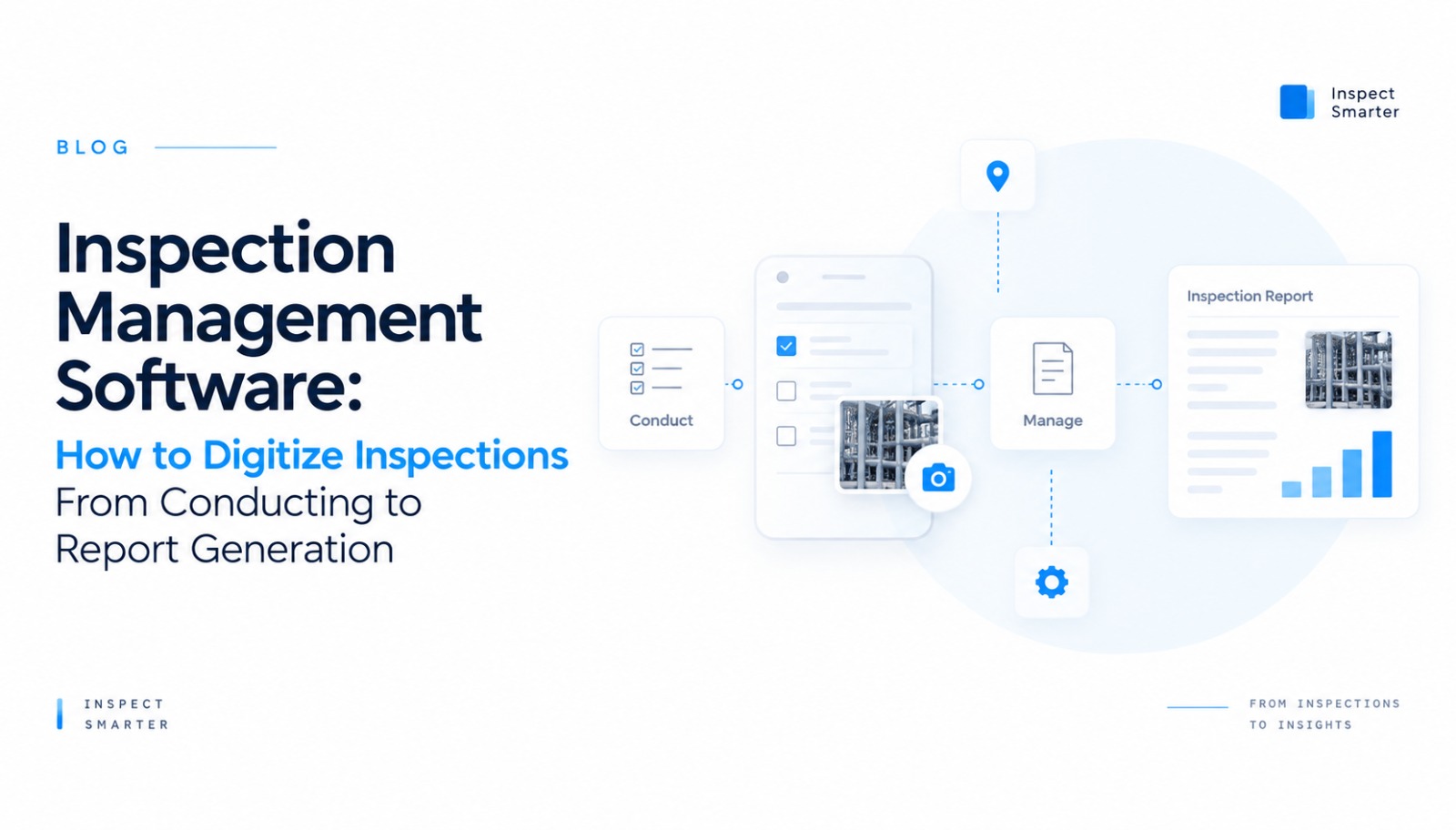
Field teams receive inspection tasks directly on mobile devices. They work through structured digital checklists on-site — even offline — with photo capture, barcode scanning, and guided workflows built in. No paperwork. No manual data transfer. No errors in transcription.
Asset-Level Verification
Barcode-based asset verification ensures that inspections aren't just recorded — they're verified. Inspectors scan the asset before beginning, creating a direct, traceable link between the physical equipment and the inspection record. This eliminates undocumented checks and spot-inspection workarounds.
Centralized Corrective Action Tracking
When issues are flagged during an inspection, corrective actions are assigned, tracked, and closed within the same platform — with accountability tied to named team members and due dates. Nothing falls through the cracks between sites.
Automated Reporting Across All Locations
Compliance tracking software that generates reports automatically means your team spends time acting on insights — not compiling them. Reports are available instantly, covering individual sites or the entire organization.
How Spectent Inspect Enables Centralized Multi-Site Inspection Management
Spectent Inspect is designed for organizations managing inspection software for multiple locations — whether that's two facilities or twenty.
The Preventive Maintenance Calendar centralizes scheduling across all sites, so inspection tasks are planned, assigned, and tracked consistently — not left to each site's discretion.
Field teams receive tasks on mobile devices and execute inspections using structured digital workflows. Barcode verification confirms the right asset is being inspected. Photo evidence and timestamps create inspection records that are complete, verifiable, and available immediately.
Managers get real-time visibility into inspection performance, issue status, corrective actions, and compliance metrics — across every location, from a single platform.
And when an audit comes — whether at one site or all of them — the documentation is already organized, complete, and ready to share.
Key Benefits for Multi-Site Organizations
Standardized Processes — Every location follows the same inspection procedures. No more variation between sites.
Real-Time Visibility — Monitor completion rates, open issues, and corrective actions across all locations simultaneously.
Stronger Accountability — Know who completed each inspection, at which site, at what time, and with what findings.
Faster Issue Resolution — Identify and address operational problems before they escalate or reach an audit.
Centralized Documentation — All inspection records, photos, reports, and corrective actions in one accessible system.
Audit-Ready at Every Site — Complete inspection history is available instantly, across every location, whenever required.
The Bottom Line: Scale Requires Systems
The inspection process that works at one location breaks down at five. What keeps multi-site organizations compliant and in control isn't more effort — it's better infrastructure.
Centralized inspection management software gives operations leaders across India the visibility, consistency, and accountability they need to run compliant operations at scale — without relying on manual coordination across disconnected teams.
Managing inspections across multiple locations?
Spectent Inspect helps multi-site organizations standardize inspection workflows, gain real-time operational visibility, and maintain complete compliance documentation — across every facility, from one platform.