Introduction
Preventive inspections are one of the simplest yet most effective ways to maintain operational reliability, improve workplace safety, and ensure regulatory compliance. Across industries such as manufacturing, facility management, healthcare, construction, logistics, and utilities, inspections help organizations detect issues before they develop into costly failures.
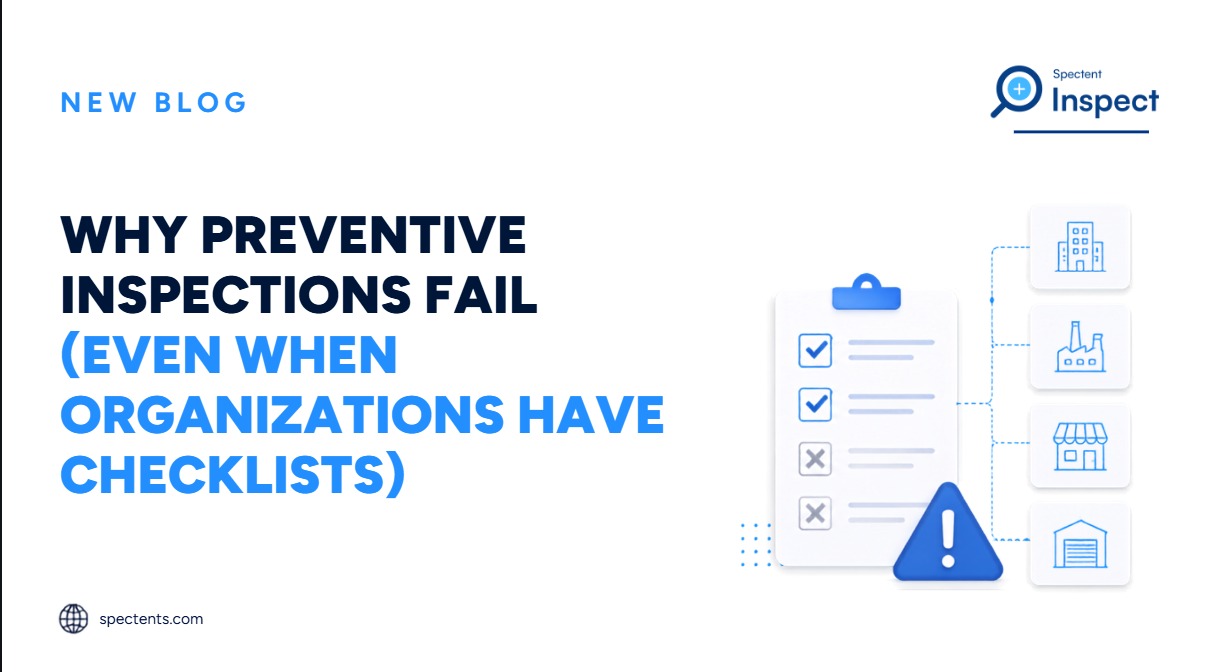
Despite recognizing their importance, many organizations continue to struggle with inspection consistency. Missed schedules, incomplete checklists, delayed reporting, and poor follow-up remain common challenges—even when structured inspection checklists are already in place.
The reality is that a checklist alone cannot guarantee an effective inspection program.
As organizations grow, operations become increasingly complex. Teams expand across multiple locations, more assets require monitoring, and greater accountability is expected. Under these conditions, manual inspection processes begin to reveal significant limitations.
This article explores why preventive inspections often fail despite having checklists, the business impact of ineffective inspection processes, and how digital inspection management enables organizations to improve visibility, accountability, and operational control.
Why Preventive Inspections Matter
Preventive inspections are designed to identify potential issues before they result in equipment failure, operational disruption, or safety incidents.
Unlike reactive maintenance, preventive inspections focus on identifying warning signs early, allowing organizations to take corrective action before problems escalate.
Regular inspections help organizations:
- Improve equipment reliability
- Reduce unexpected downtime
- Enhance workplace safety
- Extend asset lifespan
- Maintain regulatory compliance
- Reduce maintenance costs
- Improve operational planning
For industries operating critical equipment, preventive inspections are not simply a compliance activity—they are an essential part of operational excellence.
When inspections are performed consistently and accurately, organizations gain greater confidence in their operations and reduce the likelihood of costly failures.
Why Traditional Inspection Checklists Often Fail
Inspection checklists provide structure, but they do not guarantee execution.
Many organizations continue using paper forms, spreadsheets, or disconnected digital files to manage inspections. While these methods may work for small teams, they become increasingly difficult to manage as operations expand.
Several factors contribute to inspection failures.
Human Error
Manual inspections rely heavily on individuals remembering schedules, recording observations accurately, and submitting reports on time.
Simple mistakes such as skipped inspection points, incomplete forms, or incorrect data entry can significantly reduce inspection quality.
Lack of Accountability
Without digital verification, organizations often struggle to answer questions such as:
- Was the inspection actually completed?
- Who performed the inspection?
- Was every checklist item reviewed?
- Were issues reported immediately?
Limited accountability creates uncertainty during audits and operational reviews.
Inconsistent Inspection Standards
Different technicians may interpret inspection procedures differently.
Without standardized digital workflows, inspection quality varies between individuals, departments, and locations.
Consistency becomes increasingly difficult as organizations grow.
The Hidden Costs of Missed Inspections
Missed inspections rarely create immediate problems.
Instead, their impact accumulates over time.
Small issues that could have been identified during routine inspections gradually develop into equipment failures, production delays, compliance violations, and expensive emergency repairs.
Some of the most common consequences include:
Unexpected Equipment Failures
Undetected wear, loose components, overheating, fluid leaks, or abnormal vibrations eventually lead to breakdowns that interrupt operations.
Higher Maintenance Costs
Emergency repairs typically cost significantly more than planned maintenance activities.
Organizations also incur overtime costs, expedited spare parts, and production losses.
Reduced Workplace Safety
Safety inspections help identify hazards before incidents occur.
Missed inspections increase exposure to workplace accidents, regulatory penalties, and operational risks.
Compliance Challenges
Many industries require documented evidence that inspections have been completed according to schedule.
Incomplete records make audit preparation time-consuming and increase compliance risks.
Common Challenges with Manual Inspection Processes
Organizations relying on manual inspection management frequently experience similar operational challenges.
Missed Inspection Schedules
Paper calendars and spreadsheets offer limited automation.
Without reminders and notifications, inspections are often delayed or forgotten.
Disconnected Information
Inspection reports may exist across:
- Paper files
- Email attachments
- Excel spreadsheets
- Individual laptops
- Shared folders
Finding historical inspection records becomes increasingly difficult.
Limited Operational Visibility
Management teams often lack real-time insight into:
- Completed inspections
- Overdue inspections
- Pending corrective actions
- High-risk assets
- Technician productivity
Decision-making becomes reactive rather than proactive.
Slow Corrective Actions
Identifying problems is only the first step.
Organizations must also ensure corrective actions are assigned, monitored, and completed.
Without structured workflows, important issues remain unresolved for extended periods.
Why Digital Inspection Management Matters
Digital inspection management transforms inspections from isolated activities into connected operational processes.
Instead of relying on manual records, organizations gain centralized visibility into every inspection, asset, technician, and corrective action.
Modern inspection platforms enable organizations to:
- Schedule inspections automatically
- Standardize digital checklists
- Verify inspected assets
- Capture photographic evidence
- Record observations instantly
- Track corrective actions
- Generate audit-ready reports
- Monitor operational performance through dashboards
This creates a more reliable and transparent inspection process across the organization.
Benefits of Inspection Management Software
Organizations implementing digital inspection software often experience improvements in multiple operational areas.
Improved Inspection Consistency
Standardized digital checklists ensure every inspection follows the same procedure regardless of technician or location.
Better Operational Visibility
Managers can instantly identify:
- Overdue inspections
- Pending corrective actions
- High-risk assets
- Inspection completion rates
Real-time dashboards eliminate the need for manual reporting.
Faster Decision-Making
Inspection data becomes immediately available across departments, allowing maintenance teams to respond quickly to identified issues.
Stronger Compliance
Inspection histories, photographs, timestamps, and supporting documentation remain securely stored in a centralized system.
Audit preparation becomes significantly easier.
Increased Accountability
Digital records clearly identify:
- Inspector
- Inspection time
- Asset inspected
- Findings
- Corrective actions
This improves transparency throughout the organization.
How Real-Time Visibility Improves Inspection Programs
Visibility is one of the biggest differences between manual inspections and digital inspection management.
Instead of waiting for weekly reports, supervisors gain immediate insight into operational activities.
They can quickly answer questions such as:
- Which inspections are overdue?
- Which assets require immediate attention?
- Which sites have the highest compliance rates?
- Which recurring issues appear most frequently?
- Which corrective actions remain open?
This enables proactive operational management rather than reactive problem-solving.
As organizations expand across multiple facilities, real-time visibility becomes increasingly valuable.
How Spectent Inspect Helps
Spectent Inspect provides organizations with a centralized platform for managing inspections across assets, facilities, and operational locations.
Using Spectent Inspect, organizations can:
- Digitize inspection workflows
- Create standardized inspection checklists
- Schedule recurring inspections automatically
- Verify assets using barcode scanning
- Capture photos and supporting evidence
- Record observations digitally
- Track corrective actions
- Monitor inspections through centralized dashboards
- Generate audit-ready reports
- Maintain complete inspection history
By replacing manual inspection methods with connected digital workflows, organizations improve consistency, increase accountability, and gain complete visibility into inspection activities.
Conclusion
Preventive inspections are essential for maintaining safe, reliable, and compliant operations.
However, simply having inspection checklists is no longer enough.
As organizations expand, manual inspection processes become increasingly difficult to manage, resulting in missed inspections, inconsistent reporting, delayed corrective actions, and reduced operational visibility.
Digital inspection management provides the structure, transparency, and real-time insights required to keep inspection programs effective at scale.
Organizations that modernize their inspection processes are better positioned to reduce operational risks, improve compliance, strengthen accountability, and make more informed maintenance decisions.
If your organization still relies on paper forms or spreadsheets to manage inspections, it may be time to move toward a smarter, centralized inspection management platform like Spectent Inspect.