Most fire safety audits in industrial facilities still happen on paper — and that's the core problem.
A checklist gets printed, filled out by hand, collected by a supervisor, and filed somewhere. By the time an auditor, regulator, or insurer asks for proof, half the records are incomplete, unsigned, or missing entirely.
The fire safety audit happened, but you can't prove it did.
That gap between "we completed the inspection" and "here is the evidence" is where many compliance failures begin. And in most cases, it is entirely preventable.
The Real Cost of a Paper-Based Fire Safety Audit
When your fire safety audit relies on paper, the risk goes far beyond inconvenience.
A missed item on a fire alarm inspection checklist, an undocumented extinguisher check, or an unsigned inspection form can create significant legal, operational, and safety exposure when an incident occurs.
Paper records get lost. They get damaged. They get completed after the fact. Most importantly, they provide little to no evidence that the inspection actually happened when and where it was supposed to.
For facility managers, maintenance teams, and EHS leaders, this creates a silent compliance risk that grows with every inspection cycle.
The problem only becomes visible when someone asks for documentation.
And by then, it is often too late.
Scheduling Is Where Most Fire Safety Inspections Break Down
Many fire safety inspections fail before an inspector even reaches the equipment.
Inspection schedules are often managed through spreadsheets, emails, WhatsApp groups, or manual reminders. As facilities grow, these systems become increasingly difficult to manage.
Teams lose visibility into:
- Which inspections are due
- Which inspections are overdue
- Who owns each task
- Which assets require attention
As a result, inspections become reactive rather than preventive.
Instead of following a structured maintenance schedule, teams rush to complete audits before regulatory visits or internal reviews.
A centralized preventive maintenance calendar changes this completely.
When every upcoming inspection is visible in one place, teams stop chasing deadlines and start managing them proactively.
Accountability Starts with Clear Assignment
Scheduling an inspection is only the first step.
The next challenge is ensuring the right person completes the right inspection at the right time.
Consider a fire suppression system inspection scheduled for a specific building.
Who is responsible?
If the answer exists only in a conversation, an email thread, or someone's memory, accountability is already compromised.
Without clear ownership:
- Inspections get missed
- Tasks get duplicated
- Responsibility becomes unclear
- Follow-ups become difficult
A reliable inspection process requires formal assignment.
Every inspection should be linked to a specific person, a specific asset, and a specific deadline.
When assignments are tracked digitally, accountability becomes part of the record rather than a matter of interpretation.
On the Ground: Turning Inspections into Evidence
This is where the inspection actually takes place.
And this is where most compliance evidence should be captured.
An inspector approaches a fire extinguisher, alarm panel, hydrant, or suppression system and needs immediate access to the correct checklist.
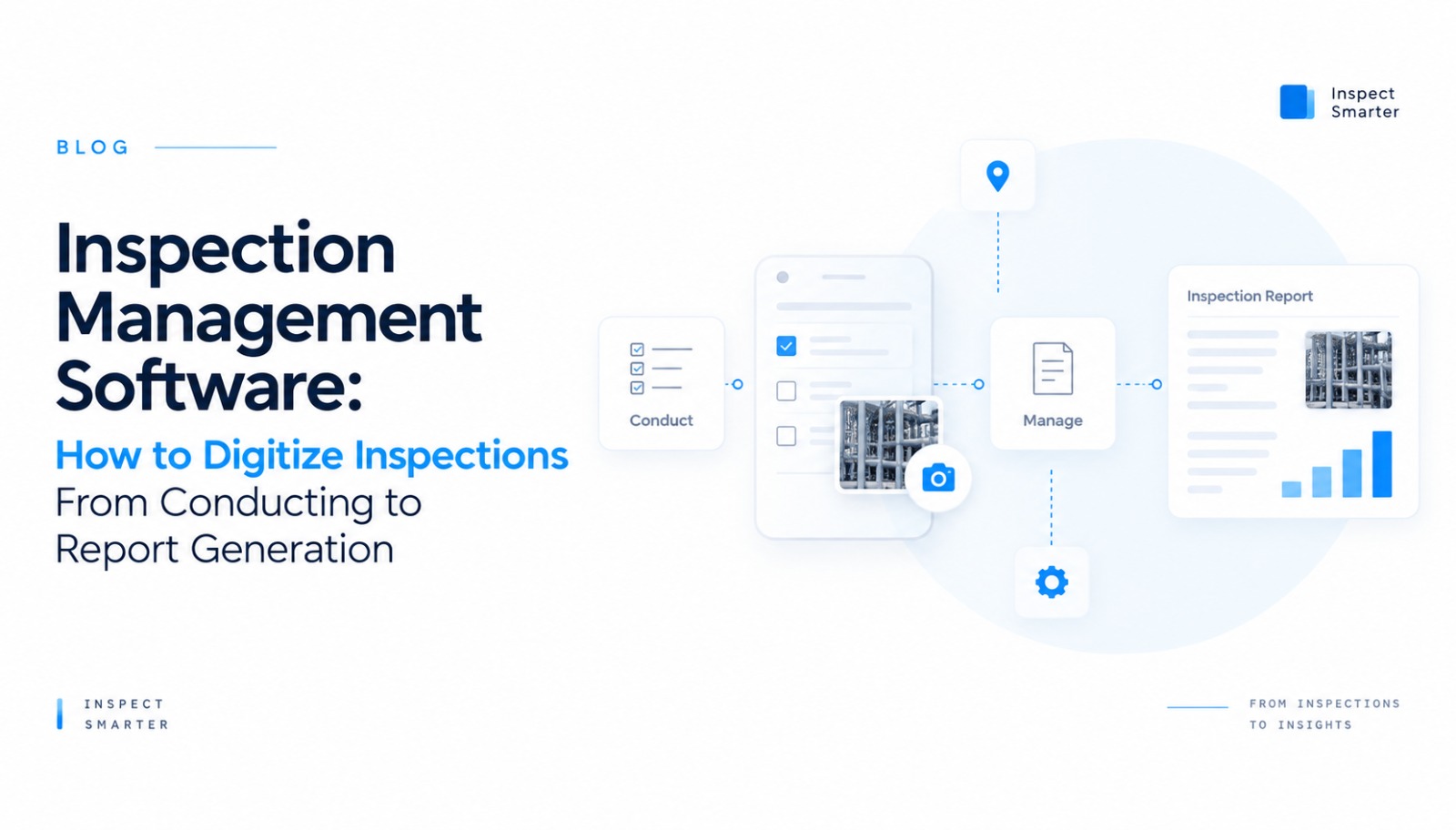
With a digital workflow, the process becomes simple:
- Scan the barcode or QR code attached on the appliance.
- Open the correct inspection checklist automatically.
- Complete each checklist item.
- Capture photographs as evidence.
- Submit the inspection.
Every action is automatically linked to:
- The specific asset
- The inspector
- The location
- The date and time
The inspection no longer exists as a paper form.
It becomes a verifiable digital record.
There is no ambiguity about what was inspected, who performed the inspection, or when it occurred.
The Fire Safety Audit Report That Builds Itself
One of the biggest hidden costs of traditional inspections is reporting.
After inspections are completed, supervisors often spend hours collecting forms, compiling findings, organizing photos, and preparing reports for management or auditors.
This manual effort introduces delays and increases the likelihood of missing information.
With a digital inspection process, reporting happens automatically.
As soon as the inspection is submitted, the system can generate a complete audit report containing:
- Inspector details
- Inspection date and time
- Asset information
- Checklist responses
- Defects and observations
- Corrective actions
- Photographic evidence
Nothing needs to be manually consolidated.
The documentation is already complete.
When a regulator, auditor, insurer, or senior manager requests evidence, the report is immediately available.
That is what being audit-ready actually means.
What a Truly Verifiable Fire Safety Audit Looks Like
A verifiable fire safety audit is not simply an inspection that was completed.
It is an inspection that can be proven.
A complete audit trail includes:
- Scheduled inspection dates
- Assigned personnel
- Asset-specific checklists
- Barcode or QR-code verification
- Timestamped inspection activity
- Photographic evidence
- Automated reporting
Every step is linked to a person, a time, and an asset.
When compliance teams need documentation, they are not searching through binders, spreadsheets, or filing cabinets.
They are accessing a complete digital record in seconds.
That level of visibility and traceability is quickly becoming the standard for industrial facilities operating at scale.
And achieving it does not require more work.
It simply requires a better process.
FAQ: Fire Safety Audits and Industrial Inspections
What is the difference between a fire safety audit and a fire safety inspection?
A fire safety inspection is a routine check of specific equipment or systems such as extinguishers, alarms, hydrants, or suppression systems. A fire safety audit is a broader review of overall fire safety compliance, inspection records, accountability, and documentation. Regular inspections provide the evidence that supports a successful fire safety audit.
How often should a fire safety inspection be conducted?
Inspection frequency depends on equipment type, operational risk, and local regulations. Fire extinguishers commonly require monthly visual inspections and annual servicing. Fire alarm systems and suppression systems may require quarterly, semi-annual, or annual inspections. Maintaining a preventive maintenance schedule helps ensure no inspection is missed.
What should a fire alarm inspection checklist include?
A fire alarm inspection checklist typically covers alarm panel condition, battery health, detector functionality, manual call point testing, alarm audibility checks, communication systems, and supporting documentation. Digital checklists also include timestamps, inspector information, and photographic evidence.
Why are paper-based fire safety audits a compliance risk?
Paper records are difficult to verify, easy to lose, and prone to incomplete documentation. Missing signatures, illegible handwriting, and inconsistent record keeping create compliance gaps. Digital inspection workflows create a complete, traceable audit trail from scheduling through reporting.
What is an industrial safety inspection checklist?
An industrial safety inspection checklist is a structured set of inspection points used to evaluate equipment, assets, facilities, or operational areas. Digital checklists ensure inspectors follow standardized procedures while automatically linking inspection results to specific assets and locations.
From Inspection to Proof
The purpose of a fire safety audit is not simply to complete a checklist.
The purpose is to create evidence that your facility is operating safely, consistently, and compliantly.
When inspections are scheduled, assigned, executed, documented, and reported through a digital workflow, every step becomes traceable and verifiable.
And when the day comes that an auditor, regulator, insurer, or customer asks for proof, you are not scrambling to find paperwork.
You already have the answer.